About Loby
Make more of the home you already have.
Most homes have space that has quietly stopped being used — a wall above a radiator, a shallow ledge in a hallway, the gap that never quite became anything. Loby designs for those places. Practical pieces that make an overlooked part of a room useful again, and look like they were always meant to be there.
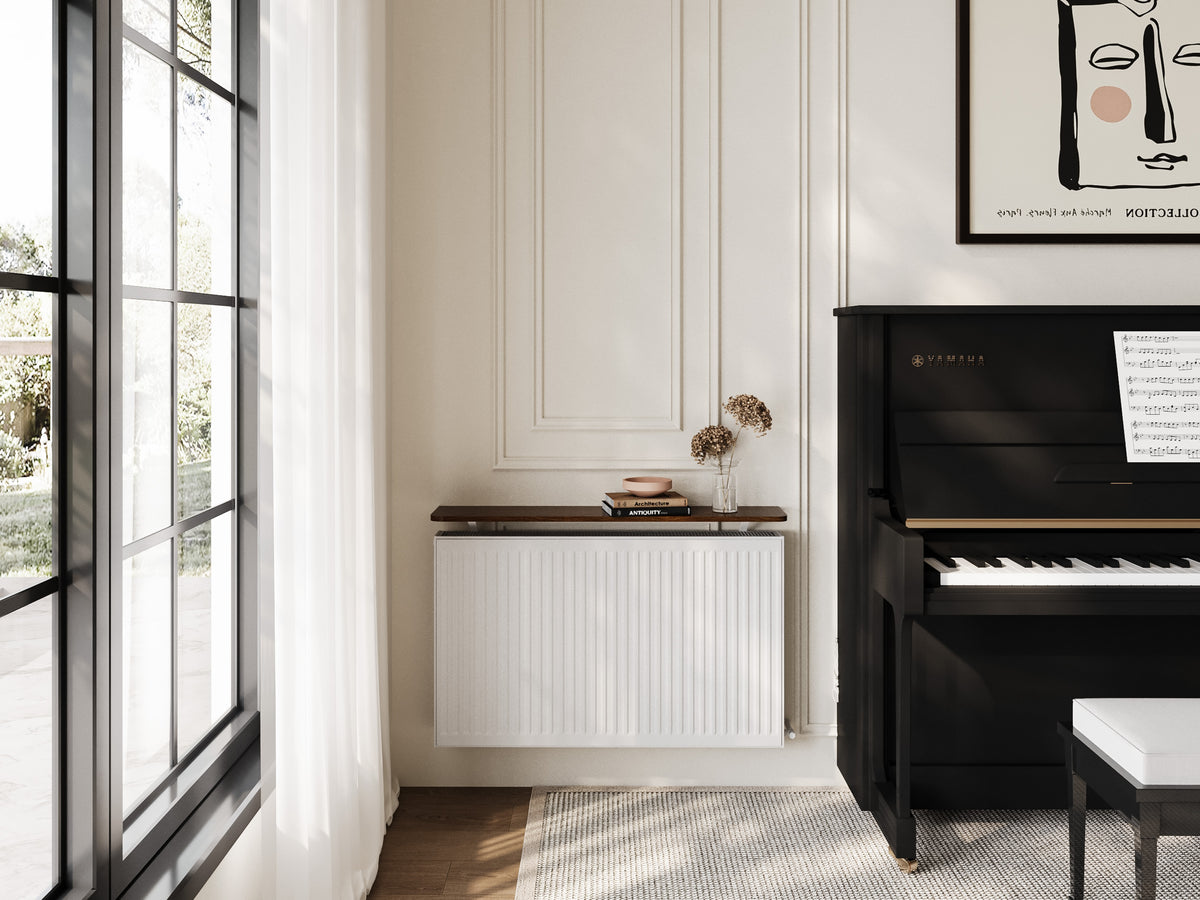
Where it started
It started with a wasted wall.
The strip of wall above a radiator is in almost every home, and almost nobody uses it. It's too warm for artwork. Too shallow for furniture. Too high to ignore, and too useful to waste.

So that became the first thing we designed: a shelf made for that space specifically, in proportions and finishes that suited the rooms it would sit in.
What we didn't expect was how quickly it stopped being about radiators. Once you notice one overlooked space, you start seeing them everywhere.
Design with purpose
A practical thing still has to belong in the room.
Useful objects in a home are too often treated as hardware — fitted, functional and visually ignored. We don't think that's necessary.
The decisions that take longest are the quiet ones. How deep a shelf can be before it starts to dominate. Where an edge should be square and where it should soften. Which finishes sit calmly against ordinary walls, ordinary skirting and ordinary radiators.
When it's right, you stop noticing the product and start noticing the room.


Where it's going
Radiator shelves are where we started, not where we stop.
The shelf solved one overlooked space. The thinking behind it applies to a lot more.
Most homes have surfaces that could work harder, corners that were never really designed, and practical areas that have been left looking practical. Those are the places we're interested in.
Loby is becoming a home brand rather than a radiator shelf company — the same approach, applied to more of the house.


How we work
Nothing is finished the first time.
A product usually starts as a small annoyance — something that doesn't fit, doesn't sit right, or only works if you already happen to own the right room.
After that it's mostly questions. How is it actually used? What size is genuinely needed? Which finish disappears into a wall, and which one fights it?
Ranges change as we learn. Sizes get added, profiles get adjusted, finishes get replaced. Most of what we know comes from how things behave in real homes rather than in a photograph.


Responsibility
Small steps, properly counted.
We support reforestation through Tree-Nation, where our growing Loby forest is independently tracked.
The number below comes directly from Tree-Nation and updates from their records, so you can see the impact as it grows.
Responsibility in practice
A few of the standards, memberships and sourcing choices behind how we design, protect and produce our products.

UKCA marked
UK Conformity Assessed

ACID member
Anti Copying in Design

Product made using responsibly sourced MDF from FSC-certified suppliers
Box made using responsibly sourced cardboard from FSC-certified suppliers
Principles
Four things that don't change.
Design with a reason
Every decision on a Loby product answers a question about how it will actually be used. If a detail is only there to look designed, it goes.
Spaces made useful
We start with the parts of a home that have stopped earning their place, and give them something to do.
Easy to live with
A product should be obvious the moment you look at it, and it shouldn't ask the rest of the room to accommodate it.
Made to belong
Finish, proportion and profile matter as much as function. A useful object should still look like it was chosen, not installed.
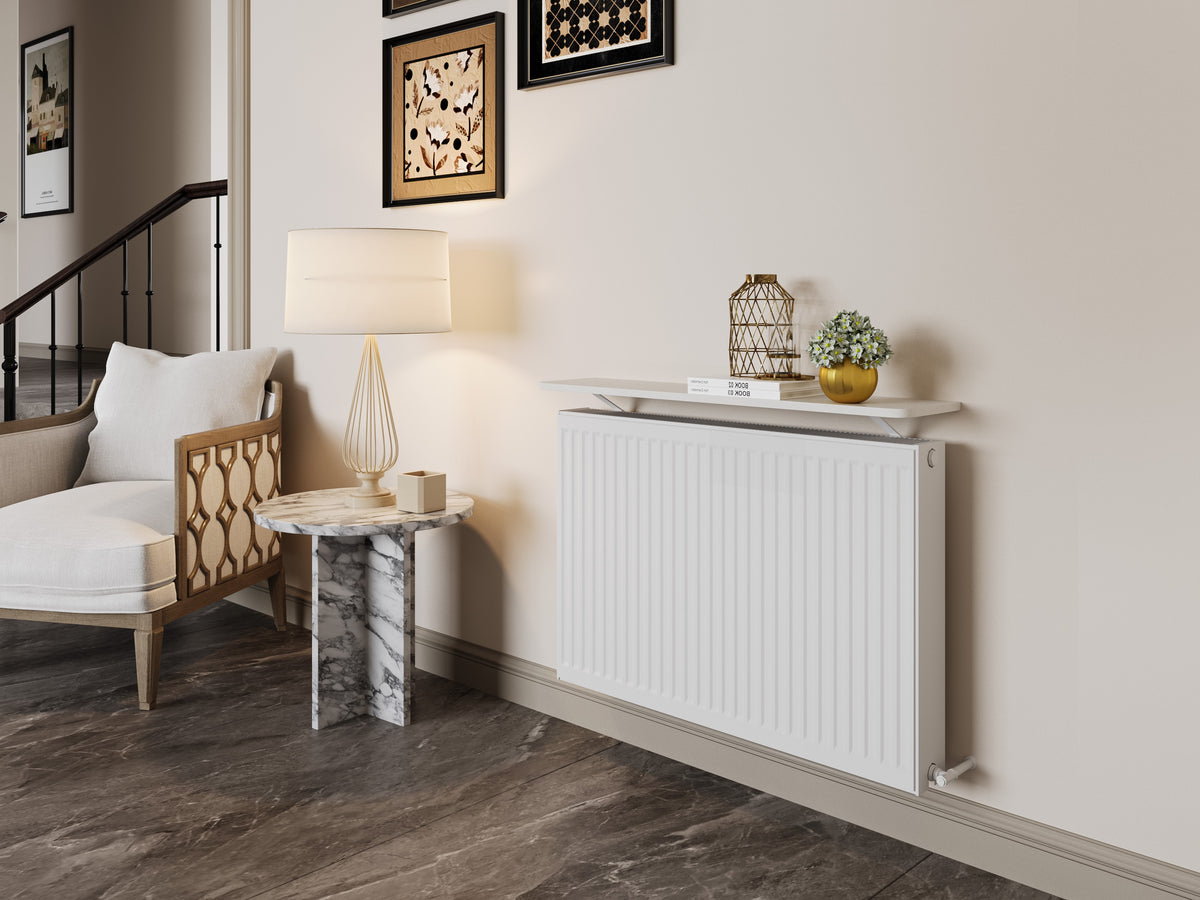
The Loby home
Warm, calm, and actually lived in.
Not a showroom. Rooms with things in them — books, a lamp left on, something that still needs putting away. Warm neutrals, timber, a bit of black where it earns it. The kind of home where a useful object doesn't have to apologise for being there.
Start with the wall above the radiator.
It's the space that started all of this, and still the easiest one to change.